| Decision | Supported value | Planning use |
|---|---|---|
| Cheese per person | 2-3 oz, mixing hard and soft cheeses | Sets your total cheese purchase from the guest count, so shop by headcount rather than by the number of products. |
| Cured meat per person | 2-3 oz across a few cuts such as prosciutto, ham and salami | Split the total across several cuts rather than buying a large quantity of one. |
| Number of cheeses | An odd number (3, 5 or 7), depending on how many people are coming | Use the low end for a small group and move up only for a bigger crowd. |
| Cured meat varieties for a larger party | 3-4 types | Gives variety without a long shopping list. |
| Cheese varieties | 3-4 types with different textures and shapes | Choosing 3 satisfies both this range and the odd-number rule. |
Per-person amounts and the odd-number rule follow Tastes Better From Scratch, while the variety counts follow Veronika’s Kitchen.
Easy charcuterie board ideas come down to a few decisions: how much to buy, how to arrange it, and what to prepare early. Start from 2-3 oz of cheese and of meat per guest, then build around that.
If you are planning a whole menu around the board, our party food ideas show what sits well beside it.
What the quantities mean for your shopping list
The per-person figures are a starting point, and a charcuterie board is forgiving. Appetizer Addiction tells readers to take its quantities as a guideline and use more or less as preferred. Its sample tray is built around 3 ounces (90 grams) of prosciutto, which shows how little of any single meat a small board needs when other items share the space.
In practice the guest count changes three things: how much of each item you buy, how many varieties you choose, and how large a serving surface you need. These choices follow from that.
- Smaller gatherings: stay at the low end of the odd-number rule for cheese, which suggests fewer cheeses for fewer people. Fewer varieties also means less to slice, arrange and store afterwards.
- Larger parties: add variety rather than just volume. Veronika’s Kitchen serves 3-4 types of cured meats at bigger parties and the same number of cheeses with different textures and shapes, so guests find something they like without every item being enormous.
- Tighter budgets: buy fewer costly items and let cheaper ones fill the space. Design Thusiasm recommends inexpensive fillers such as crackers, nuts and fruit to fill the holes between pricier items.
Choosing cheese, cured meats and fruit
A board needs contrast more than abundance. Pick items that differ in texture, saltiness and sweetness, and the board looks varied even when each element is simple.
Cheese
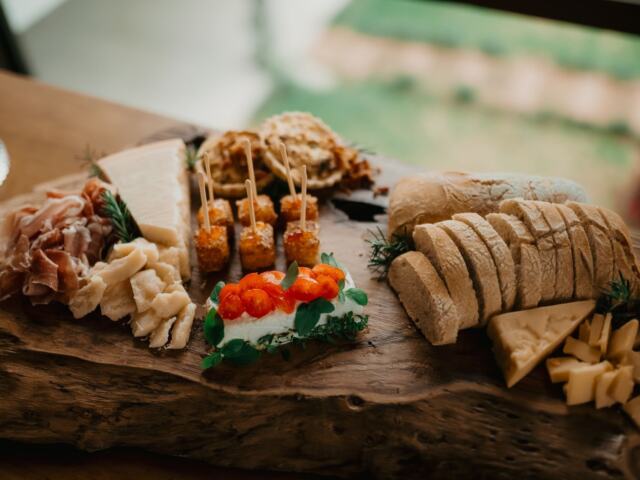
Mix hard and soft cheeses so the board offers a range of tastes and textures, as Design Thusiasm advises. Tastes Better From Scratch also recommends selecting both hard and soft cheeses. Pick cheeses of different shapes too, such as a wedge, a round and a block. They make the board easy to read at a glance and give you natural anchors when arranging.
Cured meats
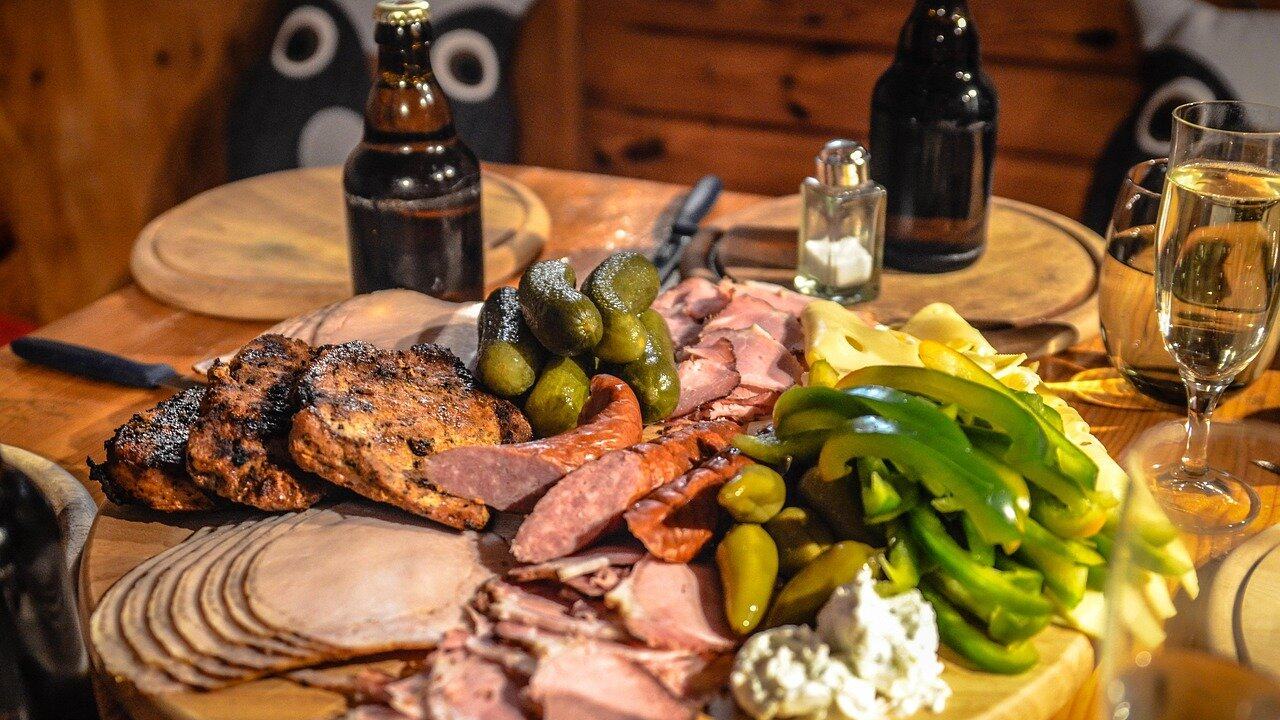
Charcuterie is a French word for cold cured meats. Prosciutto, ham and salami are the cuts named in the per-person guidance. Design Thusiasm suggests picking 3 or 4 favourites and stopping there.
Grapes and other fruit
Fruit adds sweetness and colour, and it is the cheapest way to make a board look generous. Veronika’s Kitchen lists grapes, strawberries, figs, cherries, blueberries and blackberries. Taste of Home recommends seasonal fruit for optimal freshness, which is a sound way to choose between them on the day. Grapes are the easiest option because they need no cutting.
Serving board and small dishes
You do not need special serveware. Veronika’s Kitchen says that pretty much any large cutting board, serving platter or even a rimmed baking sheet will work, and Appetizer Addiction gives the same options of a large platter, cutting board, tray or baking sheet. The rimmed baking sheet is the sensible choice if you have no wooden board, because the rim keeps loose items such as nuts and berries from sliding off.
Wet and small items need containers. Ramekins or small dishes work well for jams, spreads, olives and pickles, so these stay contained and do not run into the cheese. Dishes also double as anchors when you start arranging.
Crackers can go beside the board instead of on it. Appetizer Addiction serves crackers on the side in a bowl or on a plate, which leaves more of the board for cheese, meat and fruit.
How to assemble an easy charcuterie board
The order of assembly matters more than artistry. Work from the largest items to the smallest and the board almost arranges itself.
- Choose the surface. Use any large board, platter or rimmed sheet.
- Set the anchors. Veronika’s Kitchen starts by arranging the largest items, placing large cheese pieces or bowls first, then medium items. Design Thusiasm agrees: put the bulkiest items down first, usually the cheese wedges.
- Add the dishes. Put jams, spreads, olives and pickles in their small dishes next to the cheeses they suit.
- Place the meats. Slot cured meats between the anchors so every cheese has a neighbour.
- Fill the gaps. Tuck fruit, nuts and other fillers into the remaining spaces so no bare board shows.
- Put crackers beside the board in a bowl or on a plate.
Because Appetizer Addiction describes this as an appetizer that can be prepared in minutes, the whole process is realistic even when guests are about to arrive.
What to prepare ahead
The safest prep is the work that carries no risk of spoiling the look. Rinse the fruit and dry it well. Appetizer Addiction advises drying produce after rinsing so soggy pieces do not end up touching the cheese. Grapes and berries are the obvious candidates for this.
The same source suggests avoiding ingredients that change colour shortly after being opened, such as sliced apples or avocados. That is the main reason to leave them off a board you want to assemble before guests arrive. If you want apples, slice them at the last moment rather than ahead.
Gather the dishes, board and tools before you start, and set out everything in the order you will use it. That removes most of the assembly time.
Quick combinations to build
These combinations draw on the ingredients above, so you can mix them according to what is on hand.
- Classic cheese-and-meat board: a hard and a soft cheese, a few cured meats, grapes, nuts and crackers on the side. This is the safest choice for mixed company.
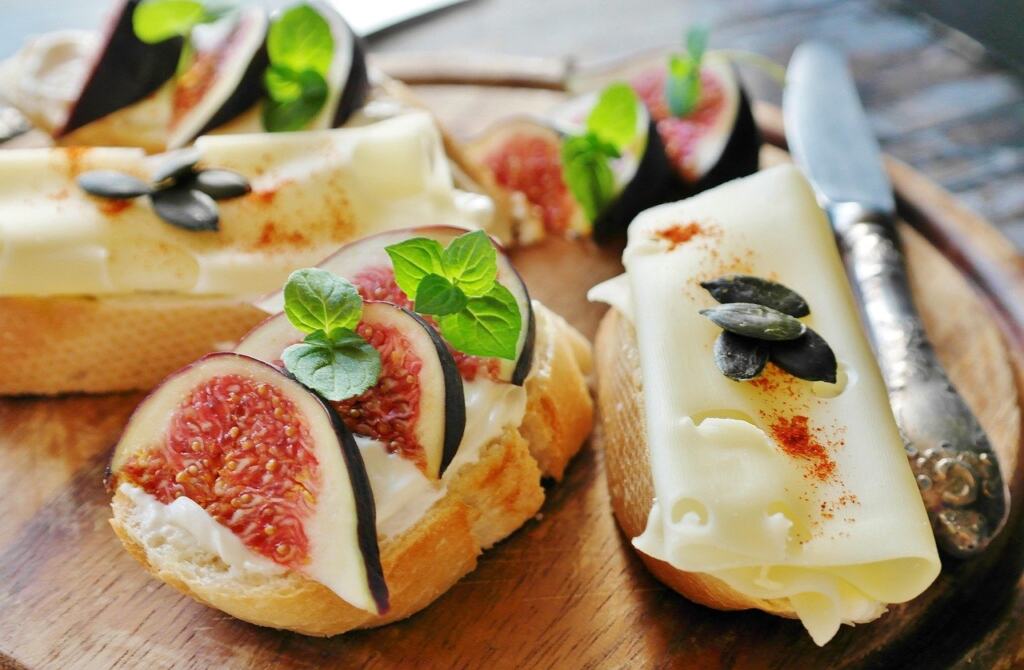
- Fruit-forward board: soft cheese with figs, strawberries, cherries or berries, plus a jam in a small dish. Suits an afternoon gathering where lighter flavours work.
- Budget board: fewer premium items, with crackers, nuts and fruit doing most of the filling.
- Light snack board: a sample prosciutto-led tray with cheese and fruit, sized for a handful of guests.
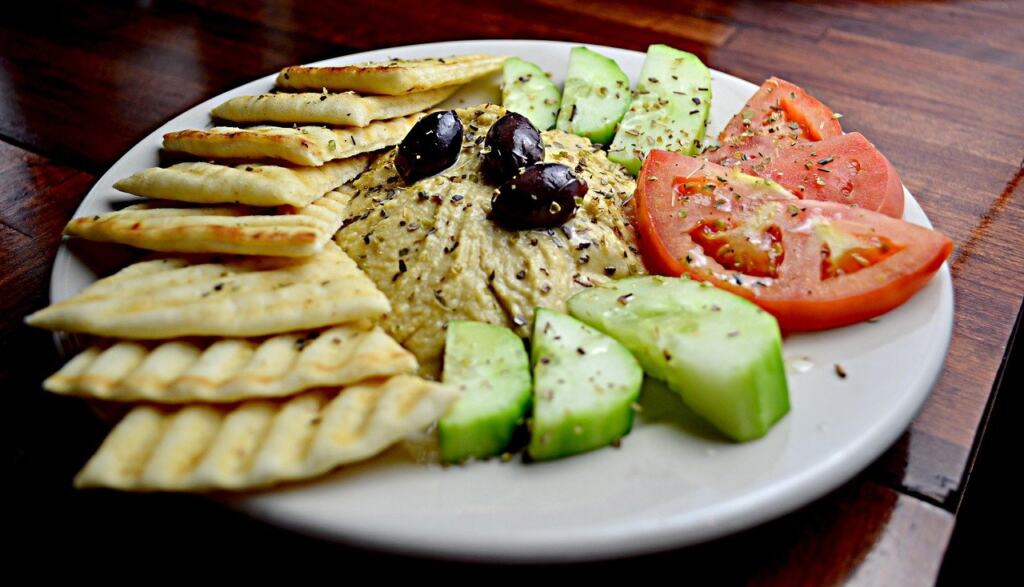
- Mediterranean board: olives in a small dish, hummus, cucumber, tomato and toasted flatbread. It works well for guests who prefer not to eat much meat.
If teenagers are on the guest list, the same board logic scales into snacks and mini-meals, as in our guide to Teen Party Food Ideas: 25 Easy, Crowd‑Pleasing Snacks And Mini‑Meals For 2026 – Invitingoccasion. For a full spread where the board is one dish among many, see Party Food Ideas Buffet: 45+ Easy, Crowd‑Pleasing Dishes for Every Occasion (2026) – Invitingoccasion.
Frequently asked questions
How many people does a small board feed?
Appetizer Addiction’s sample tray serves 5-6 people as a light snack. If the board is the main food, plan on the per-person amounts in the table at the top instead.
What can replace crackers?
Fresh baguette, crostini or any other crackers you like, according to Appetizer Addiction.
What does charcuterie actually mean?
It is a French word that refers to cold cured meats. A board that adds cheese, fruit and crackers is a broader take on the idea.
Should I buy expensive or unusual items?
Not when in doubt. Tastes Better From Scratch advises avoiding fancy or expensive items guests may not care for, and the budget fillers described above keep the board generous.