Not sure what to serve a crowd? Build your party food ideas around a filling main, two to four sides and a dessert, and add 10–15% extra for self-serve setups, following the Almanac’s party planner.
If the party is already built around a buffet table, the Party Food Ideas Buffet: 45+ Easy, Crowd‑Pleasing Dishes for Every Occasion (2026) – Invitingoccasion guide goes deeper on dishes. This page covers the planning underneath: menu structure, quantities, timing and setup.
Pick your route through the menu
Party food planning goes wrong in a few predictable places: the menu has no centre, the quantities are guesses, everything needs the oven at the same moment, or the table is laid out so guests queue and crowd. Each section below is written to be read on its own, so start wherever your problem is.
- You need a menu shape. Read the party menu section, then the appetizer and charcuterie sections to fill in the starters.
- You know the guest count and need amounts. Go to the per-guest quantities and the sample menus by party size.
- You are short on time on the day. The make-ahead timeline shows what to cook early, what to freeze and what must wait.
- You are setting up a self-serve table. The buffet section covers spacing, extra allowances and holding food.
- You are planning for a named occasion. The last section sends you to focused guides for birthdays, holidays, game days and more.
Building the party menu
A workable party menu is a structure rather than a pile of recipes: one main, a handful of sides, something to nibble on while guests arrive, and a dessert. The Almanac notes that two to four sides per meal typically work well, which gives you a clear limit to plan against rather than adding dishes until the table is full.
Start with one filling main
Busy Budgeter’s advice for platter-style dinners is to build around one filling main, such as sliced meats, chicken salad, tacos, burgers, pasta or a hot dish. That principle works well beyond platters. When the main is settled, every other dish has a job: to complement it, to be eaten before it, or to follow it.
Choose the main by how you want to spend the party. A taco or burger setup lets guests assemble their own plates and keeps you out of the kitchen. A roast gives a sit-down feel but ties up the oven and needs carving at the worst moment. Pasta and hot dishes sit between the two, provided you have a way to hold them warm; the guide on how to keep food warm for a party covers that problem.
Several occasion menus already come with a main attached. For outdoor grilling, see these bbq party menu ideas. For a seated evening, the dinner party menu ideas are written for hosts who are still building confidence. Holiday tables follow their own traditions: thanksgiving menu ideas, easter dinner menu ideas, christmas dinner menu ideas and 4th of july menu ideas.
Sides and salads
Sides do the work of making a main feel like a meal, and the best ones tolerate waiting. Pick dishes that taste good warm or at room temperature, that do not wilt or weep after standing, and that travel without drama if someone else is bringing them. The side dishes for a party guide focuses on exactly that, and the potluck food ideas page is the better fit when guests are contributing dishes.
Within the Almanac’s range, the low end suits a strong main with one or two generous sides, while the high end suits a crowd with mixed tastes and dietary needs, where variety protects you if a dish does not appeal to everyone. Aim for contrast between sides: something starchy, something fresh, and something that carries sauce.
Dessert
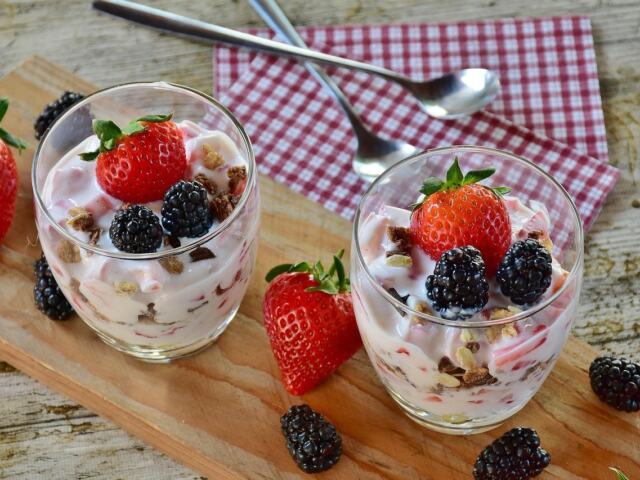
Dessert is the easiest course to make early, which is a good reason to choose it for the part of the menu you least want to think about on the day. Cakes, bars and frozen options all scale predictably, as the quantity table later in this guide shows. For ideas that suit a large guest list, see these easy desserts for a crowd.
Appetizers and finger foods
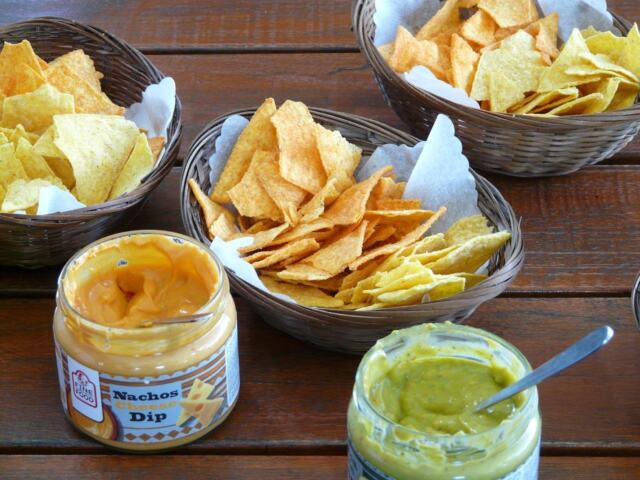
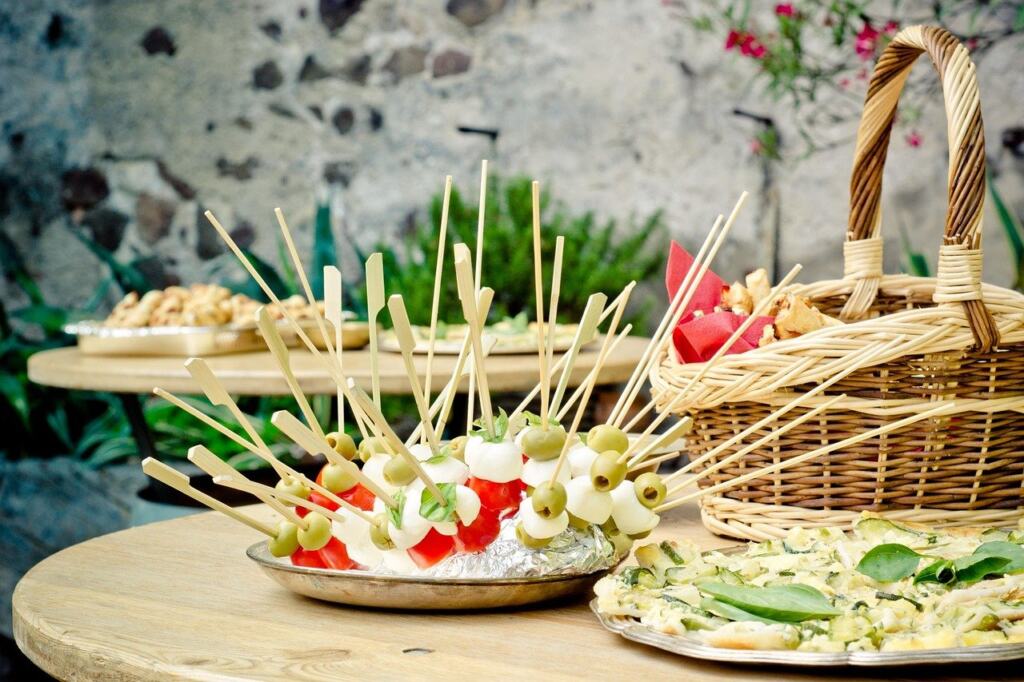
Appetizers cover the gap between arrival and the main course, and at some parties they are the whole meal. The most useful starters are bites that need no plate or cutlery, can be eaten standing up, and do not turn unpleasant if they sit out. Skewers, dips with something to scoop, small handheld pastries and wings all fit.
Mix temperatures and textures rather than serving a single type of bite. A cold skewer, a warm handheld item and a dip with crunch give guests choices and spread the load on your oven and fridge. The finger food ideas for a party guide has a wider range to choose from, and the party dip ideas page covers dips by temperature and prep time.
Some parties call for starters tied to a theme or an event. Game-day crowds are well served by the recipes in the Tailgate Party Food Ideas: 35 Easy, Crowd-Pleasing Recipes For Game Day – Invitingoccasion guide, and the super bowl party food ideas page works through a wing-led menu. For winter entertaining, Festive Finger Foods For Your 2026 Christmas Party: Easy Recipes, Make‑Ahead Tricks, And Serving Tips – Invitingoccasion pairs seasonal flavours with advance prep.
Charcuterie and cheese boards
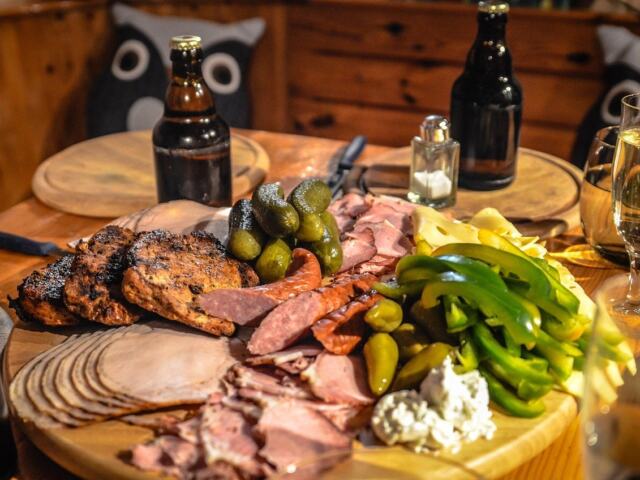
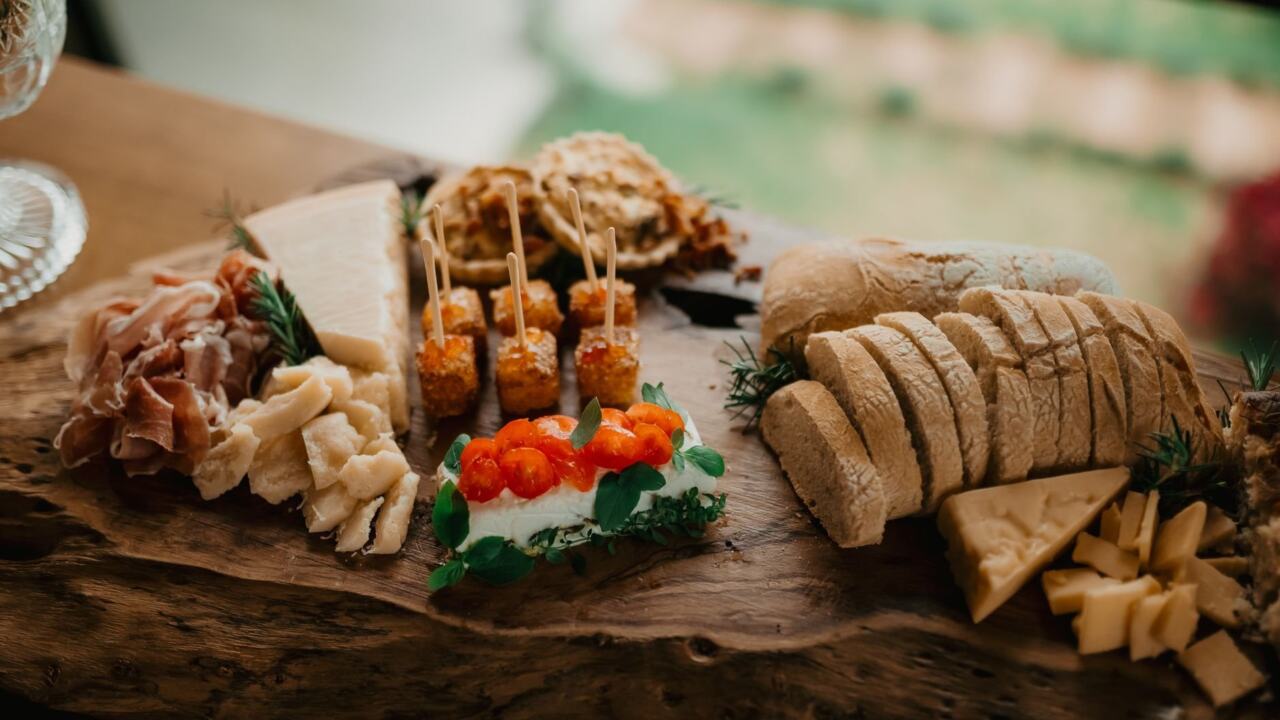
A charcuterie board is the most flexible appetizer for a mixed crowd, because it needs no cooking and lets guests choose what they eat. It works as a starter for a larger party or, scaled up, as the main course for a casual evening.
What to put on the board
Easy Real Food recommends a minimum of 1 hard cheese and 1 soft cheese, plus 1–2 fruits. Treat that as the floor for a platter rather than the target: it guarantees contrast without turning shopping into a project. Add cured meats, crackers or bread, something briny and something sweet, and the board has a balance of salt, fat, acid and sweetness.
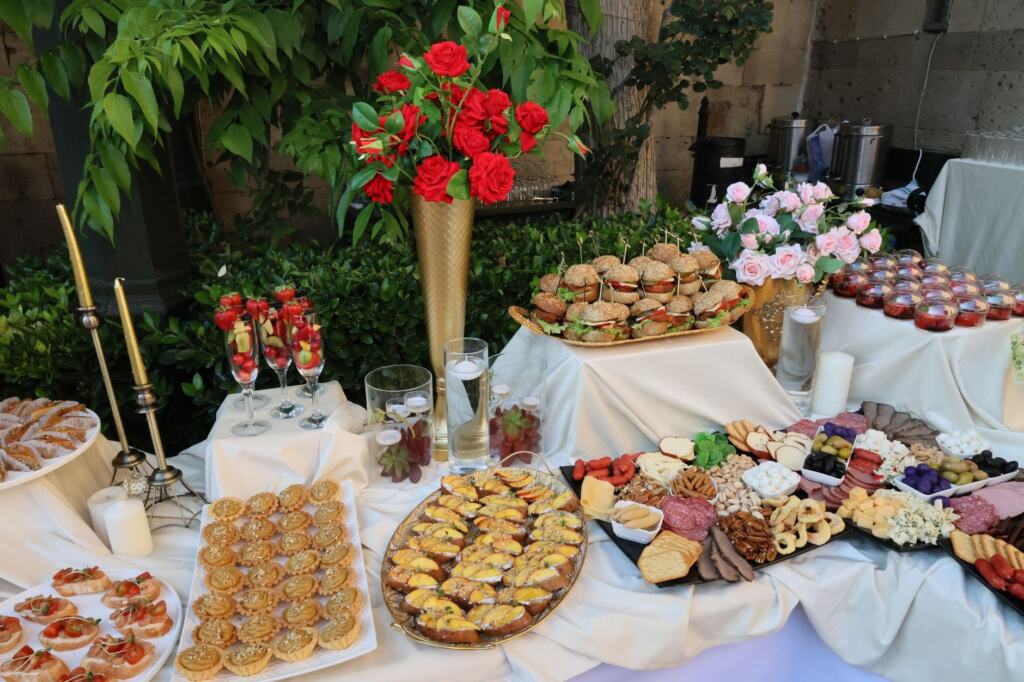
Portion size depends on the role the board plays. Busy Budgeter suggests 2 oz total of meats and cheeses per person as an appetizer, and 6 oz per person as a main course. If a board is the only food, plan toward the main-course figure and add bread, fruit and a few vegetables. If it sits alongside a main, the appetizer figure is plenty.
Spacing and layout
Placement affects how the board eats as well as how it looks. Easy Real Food advises against putting watermelon or pineapple chunks right next to crackers or nuts, because wet fruit softens crisp items. The same source suggests spreading dip bowls around the platter rather than placing them side by side, which gives guests several access points and avoids a crowd at one corner.
Board ideas by theme
Once you have the basic formula, themes keep boards from looking identical. These guides develop specific directions:
- Quick builds: Easy Charcuterie Board Ideas: 12 Quick No‑Fuss Combinations For Stress‑Free Entertaining – Invitingoccasion suits hosts who want a reliable board with minimal effort.
- Creative concepts: Unique Charcuterie Board Ideas: 7 Creative Themes To Wow Guests In 2026 – Invitingoccasion is for when the board should be a talking point.
- Younger guests: Kids Charcuterie Board Ideas: 25+ Fun, Healthy, and Easy Builds for Snack Time (2026) – Invitingoccasion covers smaller bites and familiar flavours.
- Morning gatherings: Breakfast Charcuterie Board Ideas: 12 Easy, Stylish Morning Boards For Every Occasion – Invitingoccasion moves the concept to brunch.
- Plant-based guests: Vegan Charcuterie Boards That Wow: 12 Easy Ideas And Pairings For Entertaining In 2026 – Invitingoccasion replaces meat and dairy without losing variety.
- Holiday tables: Holiday Charcuterie Magic: 12 Festive Christmas Board Ideas To Wow Your Guests In 2026 – Invitingoccasion and Red, White, And Snack: 4th Of July Charcuterie Board Ideas To Wow Your Guests In 2026 – Invitingoccasion cover seasonal colour and flavour.
How much food per guest
The quantity answer depends on the dish, so it helps to hold a handful of per-guest rules and scale from there. These come from the Almanac’s party planner and Busy Budgeter’s platter guidance.
- Roast beef, pork or ham: aim for 6–8 ounces per person.
- Whole turkey: plan 1 lb per person, since the weight includes bone.
- Wings: allow ½ lb per person, which works out at 4–6 pieces each.
- Tacos: plan ¼ lb of filling per person, about 2–3 tacos each.
- Charcuterie: 2 oz of meats and cheeses per person as an appetizer, 6 oz as a main.
For starters, the lower figure is the safer plan when several other dishes will follow. When wings or tacos are the main event, plan toward the upper end of the range, because guests return for second helpings of the dish they came for.
Scaling for 25, 50 and 100 guests
The Almanac chart converts several of these rules into quantities at three party sizes. It is most useful for traditional roast-dinner items, where portions are measured in cups, but cheese, cakes and ice cream scale just as cleanly.
| Item | Rule per guest | 25 guests | 50 guests | 100 guests | Planning use |
|---|---|---|---|---|---|
| Whole turkey | 1 lb/person | 25 lbs | — | — | Sets the roasting capacity you need before shopping |
| Rolls | 2 per person | 50 | 100 | 200 | Simple to scale and easy to buy or bake early |
| Gravy | ⅓ cup per person | 8 cups | — | — | Decide on pot size and a way to keep it hot |
| Stuffing | ¾ cup per person | 19 cups | — | — | The largest side by volume, so plan dish space |
| Cranberry sauce | ½ cup per person | 12½ cups | 25 cups | 50 cups | A cold side that frees up oven and stove space |
| Cheese | Party total | ¾ lb | 1½ lbs | 3 lbs | Starting point for a cheese board before adding meats |
| Cakes (9-inch) | Party total | 4 | 6 | 12 | Number of cakes to bake or order |
| Ice cream | Party total | 1 gal | 2 gals | 4 gals | Freezer space to clear ahead of the party |
All figures in the table come from the Almanac’s party planner chart.
Use the nearest column as a starting point for your own guest count and the per-guest rule to adjust. Roast-dinner portions suit a sit-down meal where everything lands on one plate. For a lighter spread with many dishes, guests take less of each, so the lower end of the rules above is enough.
Sample menus by party size
Guest count changes the menu more than the amounts. A small group can enjoy a single showpiece dish, while a large one needs items that scale without extra hands. These three sketches use the columns in the table above, and the same Almanac chart supports each.
Around 25 guests: one centrepiece, plain and generous
At this size, one roast or a taco setup carries the party. Choose two sides from the Almanac’s range, such as stuffing and cranberry sauce for a roast dinner, and use the 25-guest column for the amounts. Put out a cheese board built from the ¾ lb cheese figure while guests arrive, then finish with cake or ice cream. This is the size where a home oven and fridge can cope without help from rented equipment, so keep the dish list short.
Around 50 guests: split the main and spread the work
Doubling a menu is rarely the best answer here. Instead, split the main so that part of it is ready to serve while the rest is finishing, or choose a main that holds well, such as a hot dish or a taco filling. Use the 50-guest column for rolls and cheese, add the upper end of the side range, and consider both cake and ice cream so there is a dessert for every taste. Platters of finger food reduce pressure on the main course, and a self-serve layout shortens service time.
Around 100 guests: choose dishes that scale, not ones that impress
At the 100-guest column, volumes of stuffing, gravy and cranberry sauce are large enough that holding temperature becomes the real challenge. Prioritise dishes that tolerate waiting and reheat well, and share the load: a potluck contribution, a catered main or a cold buffet all suit this size better than a traditional roast. Rolls, cheese, cakes and ice cream scale cleanly in the chart, so they are the safest places to save effort.
Make-ahead timelines
The best answer to what can be made ahead is almost everything except the dish guests will smell first. Plan the order of work backwards from serving time and put the long-lead tasks first.
- Weeks ahead, frozen: baked taquitos can be frozen, and Love and Lemons suggests you can freeze a batch up to a month in advance. Freezer items like this reduce the day-of workload most.
- One to two days ahead: the Almanac says most side dishes and desserts can be prepped 1–2 days ahead. That is the window for cakes, bars, salad components and most sides.
- A day or two ahead, for fillings: Love and Lemons suggests cooking a saucy jackfruit filling a day or two in advance, which is a useful model for any braised or saucy filling that is reheated and assembled at the party.
- Ahead and improving: cowboy caviar, a bean-and-vegetable dip, is described by Love and Lemons as one that improves as it sits in the fridge. Dips that rely on marinating are better made early.
- The day itself: the Almanac says meats such as turkey or ham are best cooked the day of. Schedule the oven for roasts and keep everything else out of its way.
- About an hour before guests: Easy Real Food assembles a finger food platter 1 hour before company arrives. Prepare the components earlier, but assemble late so crackers stay crisp and fruit stays fresh.
Work in that order. Freeze what freezes, prepare sides and desserts in the days before, then use the day itself for the roast, the hot items and the board.
Setting up the buffet
A buffet suits a crowd because guests serve themselves and you stay free to host. It also changes the food maths: the Almanac advises to add 10–15% extra for self-serve setups, since guests tend to take more when they portion their own plates. Build that allowance into the shopping list rather than hoping the table will balance itself.
Layout and flow
Arrange the table in the order guests will eat. Put plates at the start, then the main and sides, with sauces and cutlery at the end, so that nobody is balancing a plate while reaching for a fork. Give each dish its own serving utensil, and keep dips and platters apart so guests are not clustered at one corner. If the room allows, split the spread into stations, with drinks and starters away from the main table, so the line for the main does not block everyone else.
Dishes with sauces and juices need rims or trays beneath them. Cold items such as boards and dips can sit out as the party begins, but dishes that must stay hot need a plan; the guide on how to keep food warm for a party covers that.
Choosing food that behaves on a buffet
Not every dish suits self-service. Favour foods that hold shape and flavour while they wait, and that can be served with a single utensil. Sliced meats, baked pasta, taco fillings and sturdy salads do well, while anything that wilts, weeps or needs last-minute finishing does not. The dishes in Party Food Ideas Buffet: 45+ Easy, Crowd‑Pleasing Dishes for Every Occasion (2026) – Invitingoccasion are chosen with that in mind.
Party food by occasion
Once the structure and quantities are set, occasion-specific guides help with the details of what to cook. Each one below is aimed at a particular guest list or setting.
- Birthdays: Easy Crowd-Pleasing Food Ideas For Birthday Parties: 25 Simple Snacks, Mains, And Treats For Any Age – Invitingoccasion suits mixed-age guest lists.
- Graduations: Graduation Party Food Ideas: 40 Crowd‑Pleasing Recipes And Serving Tips For 2026 – Invitingoccasion covers big open-house style spreads.
- Teen parties: Teen Party Food Ideas: 25 Easy, Crowd‑Pleasing Snacks And Mini‑Meals For 2026 – Invitingoccasion focuses on filling, handheld food.
- Showers: these bridal shower food ideas run through brunch, lunch and tea menus.
- Halloween: halloween party food ideas work for both children and adults.
- Warm weather: the pool party food ideas favour dishes that cope with heat.
- Cold weather: a hot chocolate bar works as drink and dessert in one, and these hot chocolate bar ideas include quantity guidance.
Frequently asked questions
| Question | Answer |
|---|---|
| Do children need a full portion? | Children typically eat half the adult portion, according to the Almanac. Count them at that rate when you scale the per-guest figures, and keep a few extras for older children. |
| How many slices of cake or pie should I plan? | Plan one slice of cake or pie per person, per the Almanac. If you offer several desserts, guests will take smaller pieces of each. |
| Can I bake a casserole in advance? | Yes. The Almanac notes that items like casseroles can be baked ahead and reheated, which frees the oven on the day for the roast. |
| Is marble or slate better for a cheese board? | Slate cleans easily and holds up, while acids such as lemons and oranges etch marble and stain it. If citrus is on the board, slate is the safer surface. |