A party food ideas buffet works best when the menu stays within one cuisine, mixes hot and cold dishes that guests can serve themselves, and needs nothing more than a fork. Heat, layout and portions decide whether it feels easy.
For more menu inspiration beyond the buffet table, browse these party food ideas, then use this page to turn a menu into a workable spread.
Choosing a menu guests can serve themselves
A buffet menu has to work with a plate in one hand and a serving spoon in the other. Bon Appétit’s buffet advice says a fork should be the only utensil guests need. It also recommends easily scoopable foods such as thick dips and spreads, and a menu built on complementary flavors within the same cuisine.
In practice, that means dishes that are already cut, sauced or portioned before guests arrive. It also means a theme that makes the dishes feel related instead of random. Three themes with supported ideas:
- Taco bar: a self-serve taco bar lets guests build their own tacos, which is why a buffet-style menu copes well with mixed tastes. Slow-cooked pulled pork makes a filling, and Mexican rice and black beans are easy sides guests can serve themselves.
- Mediterranean platter: Classpop’s party food guide suggests offering a tangy tzatziki and a creamy hummus as toppings. Both are scoopable, so they suit the fork-only rule.
- Slider station: the same guide recommends a dedicated station with pre-cooked mini patties, so guests add their own buns, cheeses and toppings. The cooking is finished before the party and guests do the assembly.
Pick one of these as the anchor and add supporting dishes in the same flavor family. If you mix several stations, keep the seasonings complementary so the plate still tastes coherent. Once the menu is chosen, the next decision is where each dish sits on the table.
Laying out the buffet table
The layout should follow the order in which guests fill a plate. A catering display guide starts with plates and utensils at the front, then lighter dishes such as salads and cold items. Work through the table in this sequence:
- Plates and utensils: put them at the very start, so nobody carries a loaded plate back to collect cutlery.
- Cold starters and salads: lighter dishes come next, ahead of the heavier food.
- Hot mains and sides: keep the heated dishes together so guests reach them after the cold items.
- Sauces: place them after the mains, so they land on the food they are meant for.
- Bread: add it near the end of the savory run.
- Desserts: keep sweets last, ideally at a separate point if the room allows.
A fork-only menu simplifies the first step, because only one utensil needs stocking at the start. A build-your-own station such as a taco bar or slider station is the exception: it works best as its own stop where guests can linger, and it should not interrupt the main line. With the order set, the heated section needs the most equipment decisions.
Hot dishes: chafing dishes and slow cookers
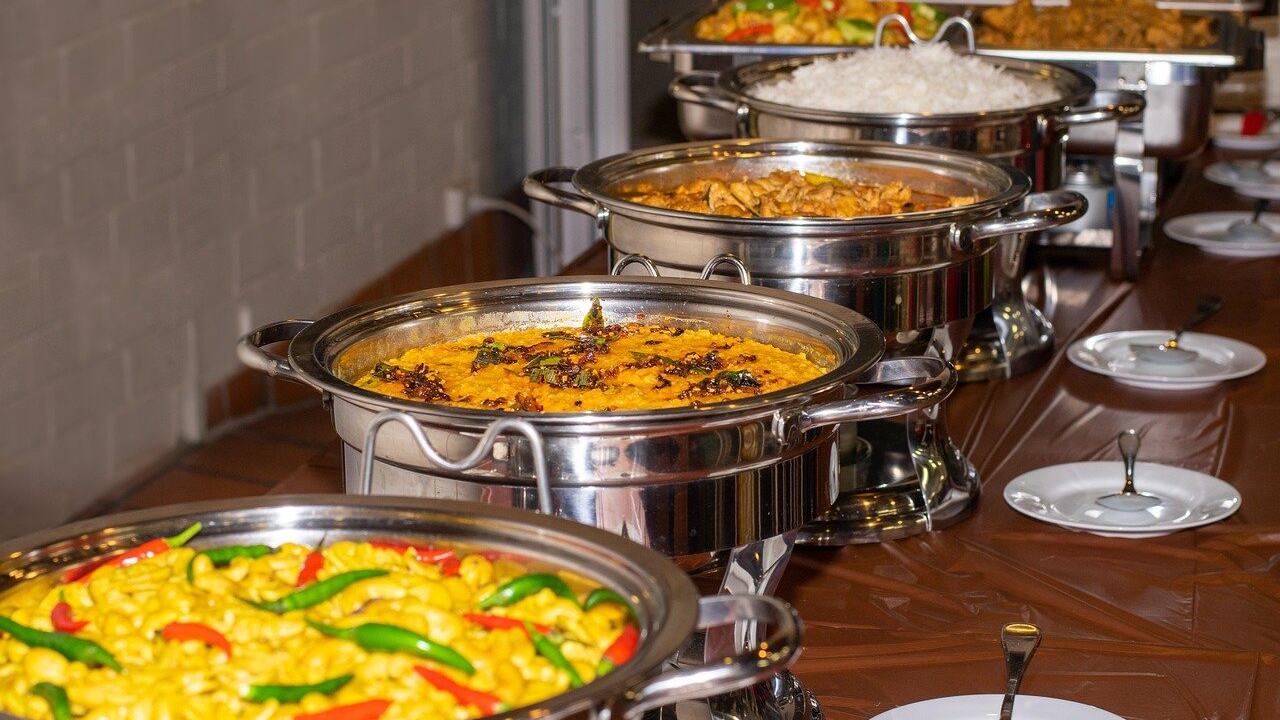
Hot food on a buffet is only as good as the way it is held. Chafing dishes are the standard answer when food has to stay at serving temperature for two or more hours, according to the same catering guide. Most commercial chafing dishes hold full-size 12 by 20 inch food pans and use gel fuel canisters for heat, so check that your dishes and pans match before the day.
Two habits help hot food hold up. Stir it frequently to prevent hot spots, and keep the lids closed between servings so the heat stays in. Closed lids matter for appearance too, which is why a row of domed lids looks tidy, but guests need to know what is inside, so add a label to each dish.
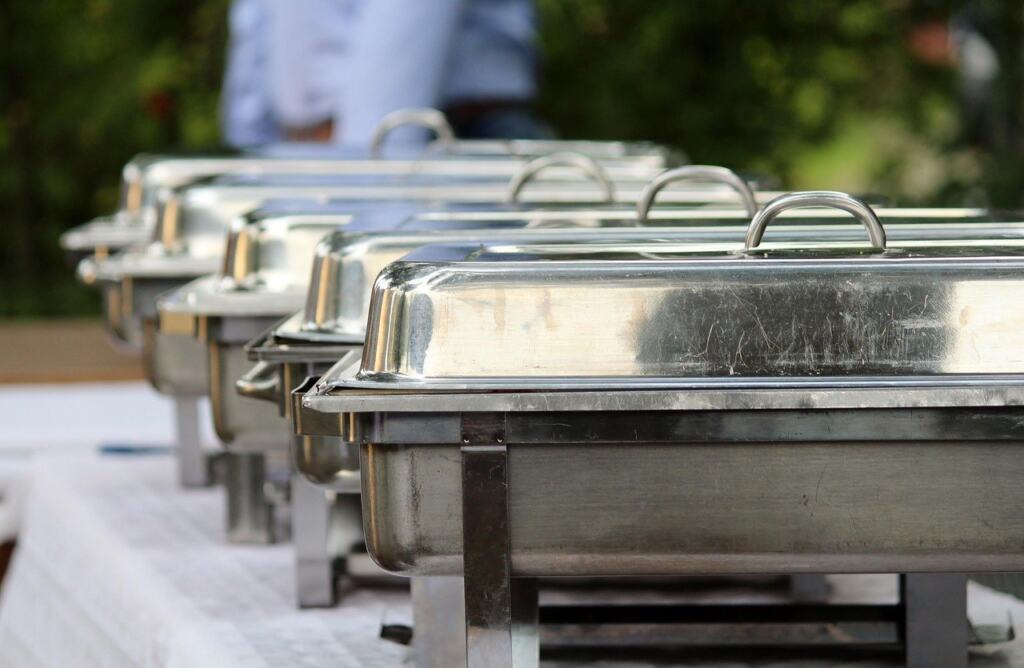
A slow cooker is the simpler choice for a single dish that should stay warm. Classpop notes that stuffed jalapeños can be served warm from a slow cooker or crockpot, and pulled pork for a taco bar is also slow-cooked. A chafing dish suits a larger line of hot mains; a slow cooker suits one or two dishes that benefit from a warm, forgiving container.
Hot mains also make the most obvious anchor dishes for your menu theme, such as pulled pork for tacos or mini patties for sliders. That leaves the cold dishes, where most of the advance preparation can happen.
Portion planning for the whole buffet
Portion guidance differs depending on whether the buffet is the meal or a snack spread before it. The figures below are catering planning amounts for full-meal events, with cocktail-style numbers where they differ.
| Item | Amount per person | Planning use |
|---|---|---|
| Main protein | 6-8 oz, cooked weight | Use for a buffet that is the full meal; weigh after cooking, not raw. |
| Side dishes | 4-5 oz per side, with 2-3 sides typical | Offer a small range of sides rather than many, each portioned at this size. |
| Appetizers | 4-6 pieces if a full meal follows; 6-8 pieces for cocktails with no meal | Choose the higher count only when the appetizers are the food. |
| Dips | 2 oz, or 6-8 cups in total for a 100-guest buffet | Gives a starting quantity for the dip bowls on a large buffet. |
These amounts come from Giggster’s food quantity guide, which describes them as catering planning figures.
The practical lesson is to decide first whether the buffet replaces a meal or sits ahead of one. A meal buffet needs both the protein and the sides rows. A pre-dinner buffet works from the appetizer row and can be much lighter. Planning the totals before shopping also tells you how many chafing dishes or slow cookers the hot items will need.
Cold dishes and what to make ahead
Cold dishes carry most of the make-ahead load, and they also free up the hob and warming equipment for the hot mains. The supported make-ahead options are specific, and each has a clear order of steps:
- Pasta salad: Classpop calls it a vibrant and versatile make-ahead outdoor party food. Prepare the pasta and vegetables in advance, then mix in the dressing and serve.
- Chilled couscous salad: cook the couscous and let it cool to room temperature before dressing it. Dressing while it is still warm is the step to avoid.
- Cakes, tarts, quiches and galettes: Bon Appétit recommends slicing them in advance, which makes serving easier. Pre-cut slices also stop guests wrestling a whole tart with a fork.
Together these give a sensible running order for the day. Prepare grain and pasta bases early and let them cool, slice baked items before guests arrive, and leave only the final dressing and the heating to the last stage. Hot dishes can then go into their chafing dishes or slow cookers, with cold dishes already waiting on the table.
Not every dish suits advance prep. Choose cold dishes whose components hold well, and keep the final mixing step for service. Those same dishes make good companions to the dips and boards below.
Dips and charcuterie
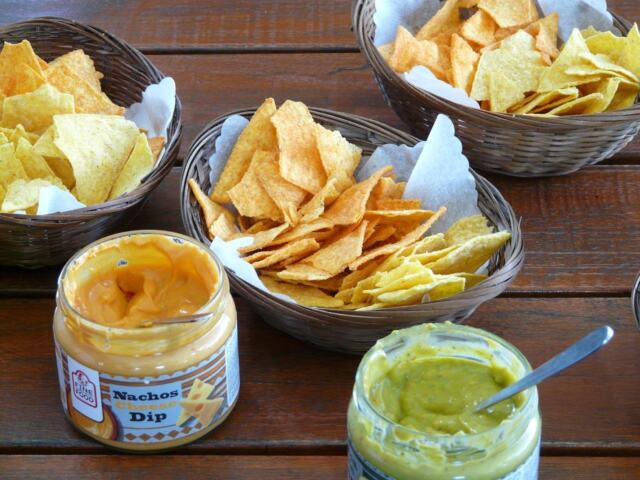
Dips and boards fill the gaps between the mains and the sweets, and they ask for little cooking. Thick dips fit Bon Appétit’s scoopable-food advice, and hummus and tzatziki serve double duty as toppings for the Mediterranean platter described earlier. Set dips near breads or vegetables, in bowls sized for the quantity in the portion table.
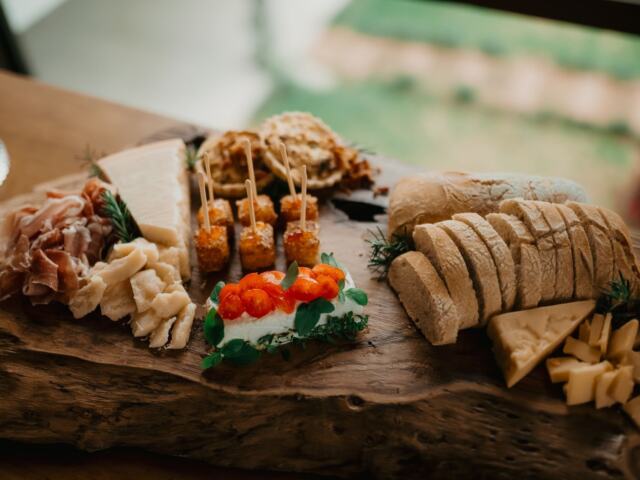
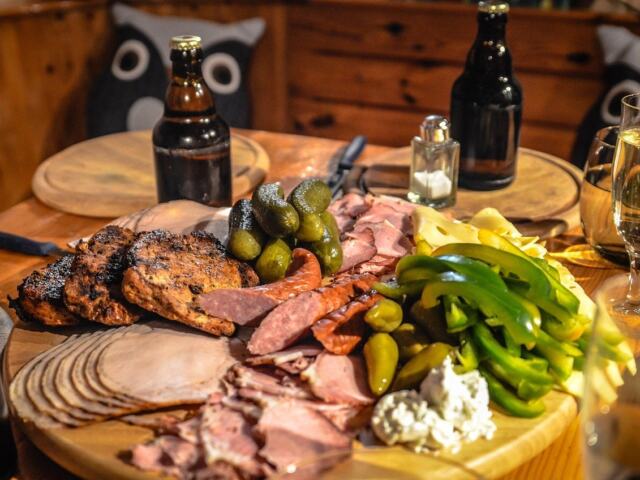
A charcuterie board is one of the easier things to assemble. Classpop’s approach is to buy favorite charcuterie and cheeses and add fruit or vegetables, so no cooking is needed. That makes it a good first item to hand to a helper. For specific combinations, see Easy Charcuterie Board Ideas: 12 Quick No‑Fuss Combinations For Stress‑Free Entertaining – Invitingoccasion, and for a seasonal spread see Holiday Charcuterie Magic: 12 Festive Christmas Board Ideas To Wow Your Guests In 2026 – Invitingoccasion.
On a laid-out buffet, a board sits best with the cold items near the front of the line, where guests can build a first plate from it. It also works as a stand-alone grazing point if the main line is crowded.
Desserts that finish the buffet
Dessert should be easy to serve and not too fussy. Bon Appétit’s advice is that it should be a simple, sweet way to end the night, with no elaborate toppings that need last-minute work. Cutting cakes, tarts and similar items in advance, as covered above, means guests only have to pick up a slice.
Giggster’s planning figures separate the two common formats: one slice of cake per person, or two to three bite-sized desserts per person. The bite-sized format suits a cocktail-style gathering, and a single slice suits a meal buffet. For a dessert bar for 100 guests, the same guide describes three varieties and 200 pieces in total, which is two pieces per person. Three varieties give guests a choice without making the table complicated.
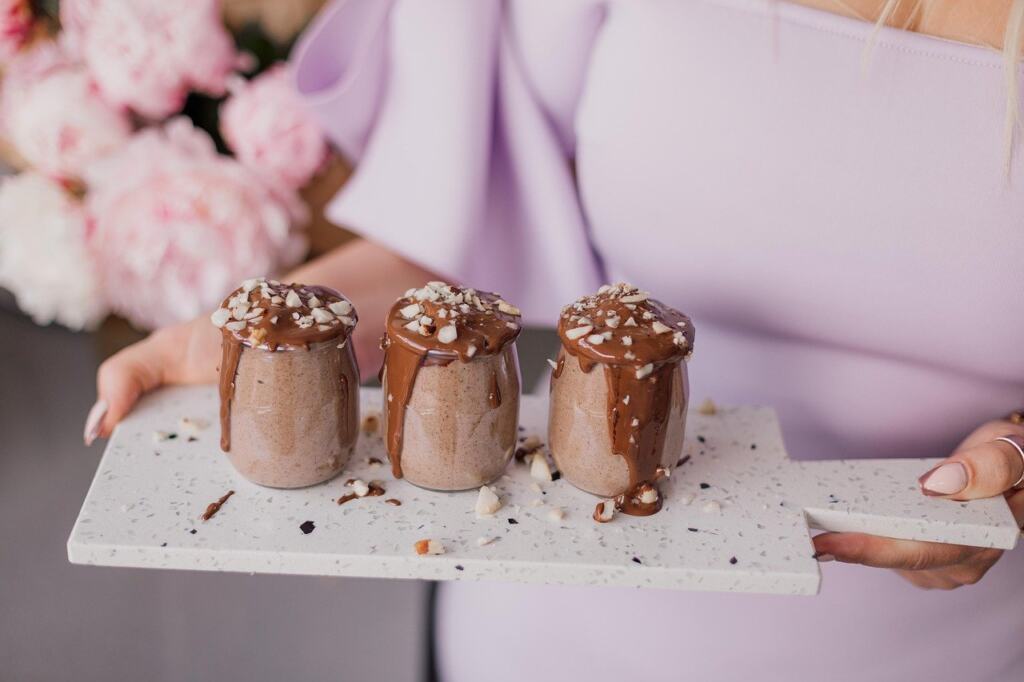
Place desserts at the end of the line, as in the layout order, so guests choose sweets after the main course. Small individual servings like the ones above are easy to grab when guests are standing, and they spare the host from slicing at the table.
Frequently asked questions
How many chafing dishes does a buffet need?
Plan about one full-size chafer per 15 people, depending on how varied the menu is. Three full-size chafers fit comfortably on a 6-foot catering table with room left for servingware and labels, according to the catering display guide.
How much extra food should a buffet include?
For buffet-style service, Giggster’s guide advises adding 10-15% above the base portions to cover seconds and waste.
What drinks should a buffet offer?
Keep drinks streamlined so guests are not overwhelmed. Bon Appétit suggests two options, red or white wine, with water alongside.